

Things To Do on a Hike Besides Hiking: Slowing Down on the Trail
Hear me out: going on a hike is the perfect opportunity to do almost anything besides hiking.
I’ve said before that hiking doesn’t really begin at the trailhead. The moment you start paying attention—to your surroundings, your breath, the subtle shifts in the landscape—you’ve already stepped into the experience.
If you’re wondering what to do on a hike besides hiking—or looking for things to do while hiking alone—the answer often starts with slowing down enough to actually experience where you are.
Nature is where that kind of noticing becomes easiest for me. Hiking and adventure are my favorite ways to step into it. The trail and the views will always be part of the reward, but Souleyness is about going a little deeper than that—about discovering how much more the experience offers when you invite yourself fully into it.
Because as we’re walking through nature, an entire world is quietly unfolding around us.
Somewhere nearby a bird is arguing with the morning. The forest floor is constantly rearranging itself. Even the air changes as you move deeper into the trees.

This blog invites you to see nature not just as scenery, but as a relationship.
On a hike, that relationship can take many forms. Sometimes it looks like simply walking the trail, but just as often it looks like pausing to notice something small, journaling beside a view, identifying plants along the path, or sitting quietly and letting the environment unfold around you.
In other words, there are plenty of things to do on a hike besides hiking—and many of them make the experience far richer than simply reaching the destination.
One of the Most Overlooked Hiking Activities: Micro Hiking
Many people assume the only thing to do on a hike is walk the trail or reach a viewpoint. But there are actually many ways to engage with the landscape that deepen the experience.
One of the simplest shifts you can make is setting the intention to view nature as a collaborator rather than a backdrop, meaning that before you even take your first step, you’re already consciously choosing to see, hear, and feel more.
One of the most overlooked hiking activities that encourages this mindset is something called micro hiking—the practice of exploring the smaller worlds within the larger landscape.
When we move quickly along a trail, the hike becomes a simple journey from point A to point B. We focus on distance, elevation, or reaching the next viewpoint. But when you slow down to notice, even slightly, the trail begins to change. Deeper details start appearing.
Moss forming tiny forests on fallen logs.
Insects navigating the architecture of leaves.
Water carving quiet pathways through soil and stone.
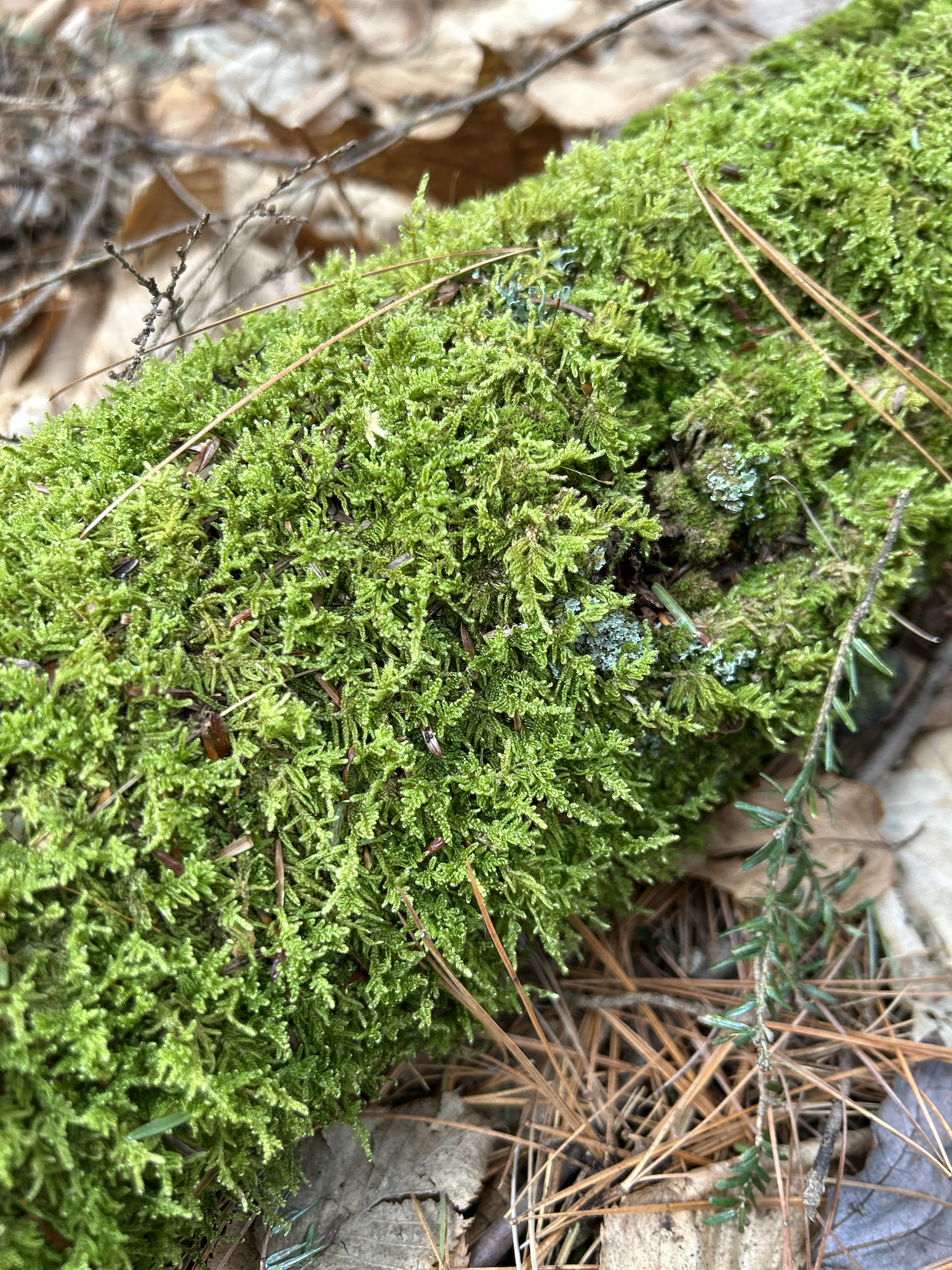
Instead of covering more ground, you focus on a few square feet at a time. You might kneel down to study a patch of moss, trace the lines in tree bark with your fingers, or watch how sunlight shifts across a rock as the clouds move overhead.
It’s not necessarily about ‘slowing down the hike’—it’s more about changing the scale of your attention on the hike.
When you begin noticing the smaller life happening all around you, the trail becomes more interactive. You’re no longer just passing through nature. You’re observing it closely enough to feel like part of the conversation.
And often, those quiet details become the most memorable part of the entire hike.
Adventure comes in all shapes and sizes. It doesn’t always mean covering more ground. Sometimes it means asking the landscape a question and seeing how it answers.
You can even use the trail as a place to check in with yourself—especially if you’re looking for things to do while hiking alone:
What are the three most distinct sounds I can hear if I close my eyes for 30 seconds?
What patterns in nature—growth, decay, resilience—reflect patterns in my own life right now?
How is my body feeling? Do I need to adjust my pace, posture, or hydration?
Simple Hiking Activities That Deepen the Experience
If you’re wondering what to do on a hike besides hiking, here are a few simple ways to deepen the experience without turning the trail into a checklist:
Journaling from the perspective of the landscape: Instead of writing about your hike, try writing from the as if you were the hiking trail itself. What would the river say if it could narrate your walk? What would the trees notice about the people who pass through? What's the story behind that fallen tree/random rock?
Shifting perspectives like this can turn the hike into a creative collaboration—one that puts you in conversation with your surroundings.

Sitting still long enough for the environment to change around you: Find a rock, a fallen log, or a patch of ground and stay there long enough for the environment to subtly shift around you—how light moves through trees and reflects on the ground, or how your breath slows and perhaps joins the rhythm of the breeze.
Trace the trail: Pick up a leaf or trace the grooves of tree bark with your fingers, or bring a pencil and paper and trace on the trail. Nature is full of repeating shapes and patterns—spirals, veins, branching lines that feel oddly familiar to the human eye.
There’s something deeply grounding about interacting with these forms, as if the body recognizes them instinctively.

Learn the landscape: If curiosity strikes, apps like iNaturalist, Merlin Bird ID, or Picture Mushroom: Idetifier can help you identify the plants, mushrooms, and birds you encounter along the way. Sometimes simply learning the name of something deepens your connection to the place where you found it.
Playing hiking games: You can treat most of the tips in this blog as a hiking game, but some more specific ones include ‘I Spy’ with natural objects, a nature scavenger hunt (great for families), or shape searching in rocks, leaves, and clouds.
Redefining Adventure on a Hike
Yes, long, strenuous hikes have their own rewards. Pushing your body and exploring new terrain can be incredibly fulfilling. But slowing down enough to intentionally observe the environment can be just as meaningful.
In this way, nature stops feeling like the backdrop to your workout. It becomes the vantage point of your experience—the place where you observe yourself interacting with the world around you.
Your Ness.
If this idea resonates, I explore it more deeply in another post about The Art of Noticing, where I write about how attention changes the way we experience everyday environments.

Here are two ways to challenge yourself and deepen the experience on your next hike:
Walk Without Tracking Distance or Time
So much of our daily movement is tracked—steps, distance, pace, productivity. A hike is one of the few places where that urgency can soften. Let yourself wander a little. Pause when something catches your attention, even if it slows the journey down.
After all, most trails eventually lead you back to where you started.
Have the Courage to Listen
When the noise of everyday life fades, your inner voice often becomes louder. Sometimes that voice brings clarity. Other times it raises questions we’ve been avoiding. Either way, the quiet of nature has a way of making those signals easier to hear—and sit with.
The Real Adventure Is Learning to Notice
Sometimes the most adventurous thing you can do on a hike is slow down long enough to actually experience it.
Not every hike needs to be about distance or elevation gain. Sometimes the most meaningful moments happen when you pause beside a stream, sit quietly on a rock, or notice something small that would normally go unseen.
Nature offers beautiful scenery, but it also offers perspective.
When you take the time to look closely, you begin to see patterns—both in the landscape and within yourself. The hike becomes less about reaching the end of the trail and more about being present for the journey.
And often, the things you carry home from the trail aren’t photographs or step counts. They’re the quiet details you noticed along the way.
The next time you step onto a trail, try slowing down just enough to notice something you would normally miss.
You might be surprised by how much more the hike has to offer than simply the hike.